
Scavenging can feed your shop with parts and sellable finds, but it costs time and usable inventory space. Prepare tools, leave room in the backpack, and prioritize components you already need rather than carrying everything you find.
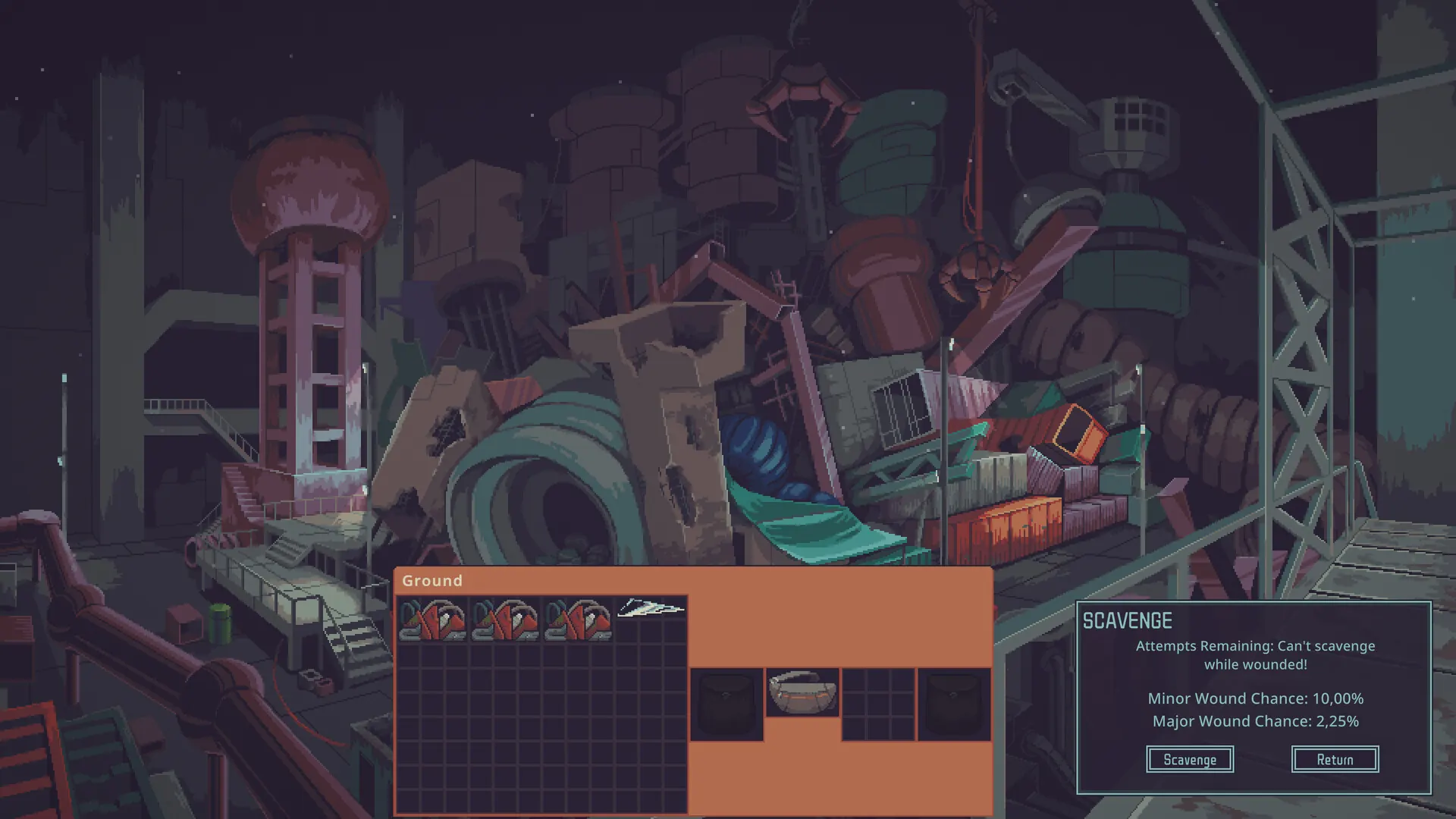
Before you leave
In a current Water Merchant playthrough at about 17:30–20:00, the player weighs a Toolbox and scanner, decides against an extra power block and rearranges equipment before heading out. The useful principle is simple: choose tools that match your actual objective and don’t spend all your cash preparing for a run.
- Decide which parts or stock would make the trip worthwhile.
- Keep room in your backpack for what you want to recover.
- Verify tool condition and whether the item fits in your carried equipment.
- Avoid selling repair supplies that your essential machines need.
- Check the day and upcoming rent before committing to another trip.
What should you keep?
Sort finds into three groups after returning: necessary machine repair or upgrade inputs; goods that match current demand; and low-value clutter that you do not expect to use. Check condition and legality on unfamiliar items before reselling. The item authentication guide explains why apparent market value alone is risky.
A stream around 25:30 shows junk being evaluated and electrical parts assigned to machinery rather than sold casually. It is a concrete example of assigning loot a purpose.
Should you scavenge every day?
No fixed cadence is supported by the sources. Some creators skip a day to focus on a demand window, and some alternate other visits with scavenging to obtain cards or crates. Use your own shop’s needs. When you have incoming rent, money and rent is more important than a speculative loot run.
September-demo differences that matter in a scavenging run
The UPDATE 049 patch notes fix the flashlight passive effect: it no longer gives a scavenging bonus when left back at the store. Put the tool you plan to rely on in the loadout you actually carry. The notes also say a Scav Scanner that is fully upgraded cannot consume further electronic parts, eliminating one old source of wasted resources. Both are specific, verifiable reasons to check the game’s current version before following an old route.
Scrap-metal repairs were changed to restore 50% of an item’s maximum durability, rather than a flat 50 points. That changes how useful a piece of scrap may be for different tools; inspect the repair panel rather than assume an old spreadsheet still reflects the present build. If a run brings back parts that you need to repair your only working machine, their value to the shop can exceed the cash from immediately selling them.
Before leaving: choose one equipment objective, empty enough backpack space for loot, carry the relevant tool, and keep your rent money out of the scavenging spend. After returning: sort usable machine materials first, then items you can actually sell, and lastly miscellaneous junk. This is an operating order derived from the recorded Water Merchant run around 19:54 and the developer’s current tool changes, not a claim about exact drop rates.
Last checked September 16, 2026. Instructions refer to the September demo unless otherwise stated.